
We Value Your Privacy
We use cookies and similar technologies to enhance your browsing experience, analyze site traffic, and personalize content. By clicking “Accept All,” you consent to the use of all cookies. You can manage your preferences or learn more by clicking “Settings.”For detailed information, please review ourPrivacy Policy.


Build with Asvoria.app — Launch Smarter, Faster!
Instantly create stunning AI-powered web apps and games for your next big project on Asvoria.app. No coding. No waiting. Just launch.
Tether Says It Froze More Than $1.5 Billion After Binance Attack
November 2, 2026 at 1:00 PMby The Block Whisperer

+1

+0
Tether reports a rapid USDT freeze after the Binance theft, highlighting the role of issuer controls in recovery.
Web3 insights in your social media feed
Issuer Reports an Early Intervention
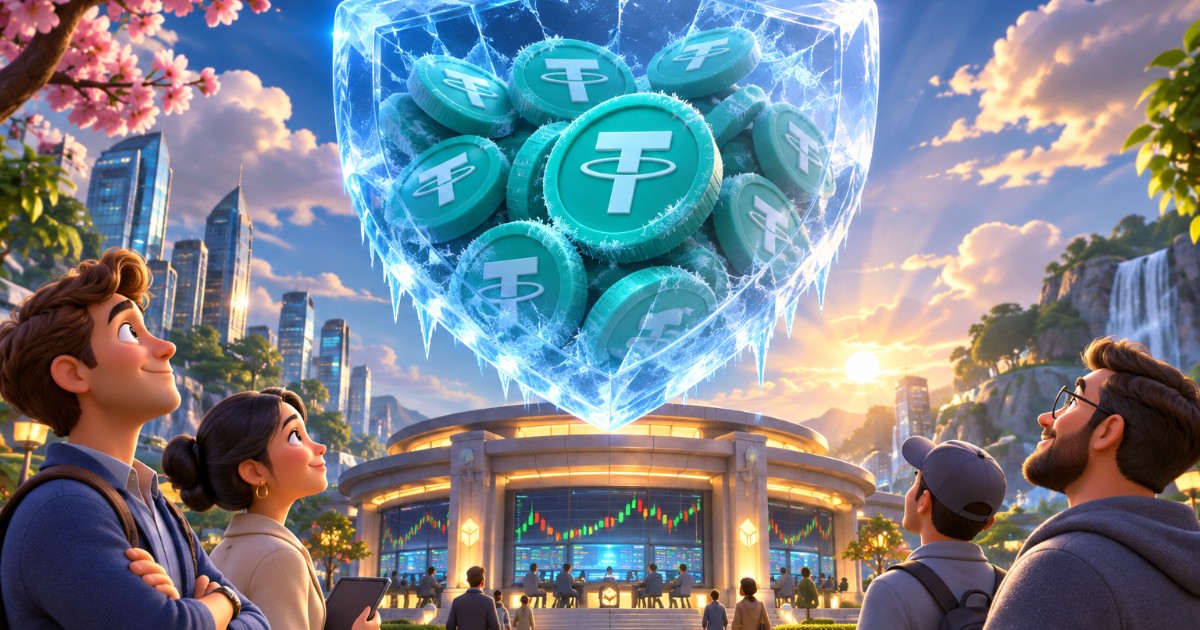
Tether said on November 2 that it froze more than $1.5 billion in USDT within 30 minutes of the October 29 Binance attack. The company linked the intervention to the theft that the FBI has attributed to North Korea. The amount and response time are Tether's account of its own actions.
According to the company, the freeze prevented the identified tokens from being transferred or exchanged further. Its statement also describes cooperation with law enforcement and industry partners. Freezing assets is an important interruption, but the announcement should not be interpreted as confirmation that the same amount has already been returned to Binance customers.
An Issuer Can Act at a Different Layer
Centralized stablecoins can combine public blockchain transfers with administrative controls exercised by their issuer. That creates a response mechanism different from tracing a cryptocurrency whose protocol has no comparable issuer. A transaction trail can help identify funds, while token-level controls may prevent certain balances from continuing to move.
That distinction explains why recovery statistics need careful labels. A traced balance is a balance investigators can follow. A frozen balance is one whose movement has been restricted. A recovered balance has been brought back under an authorized party's control. These stages may overlap, but each represents a different result.
Speed Helps, While Recovery Requires More Work
The announcement illustrates how the period immediately after a theft can shape the response. If assets pass through additional venues or change form, the parties able to intervene may change as well. Rapid coordination can therefore matter even when the final investigation and disposition of funds take much longer.
The same administrative capability is also part of the stablecoin's operating model. Holders depend on an issuer's policies, legal obligations and controls alongside the blockchain's transfer rules. Understanding that structure is useful for businesses integrating stablecoins, because token behavior can be affected by events beyond the operation of the underlying network.
Tether's statement establishes a company-reported freeze tied to a specific incident, rather than a complete account of the exchange's recovery. The next meaningful evidence concerns the status of immobilized funds, authorized recovery procedures and any eventual return. Keeping those outcomes separate provides a clearer picture of what the intervention achieved and what still remains to be done.
Explore more articles like this
Subscribe to Asvoria News to receive all the latest news.
Stay ahead with exclusive press releases and expert insights on Web3 and the Spatial Web. Be the first to hear about Asvoria’s latest innovations, events, and updates. Join us — subscribe today!
Editor’s choice
- Crypto Carnage: $102K Bitcoin Flash Crash and SUI’s 87% Plunge as Tariff Shock Triggers Record Liquidations
- Tensions Between U.S. Senators Stall Crypto Regulation Bill
- Major Global Banks Explore Issuing Stablecoins Pegged to G7 Currencies
- BlackRock’s iBIT ETF Hits 100 Billion Dollars in Assets Amid Institutional Crypto Surge
- S and P Introduces Digital Markets 50 Index Blending Crypto and Stocks
© 2026 Asvoria. All rights reserved.
Avoria does not endorse or promote investment in any of the tokens or NFT projects featured on this platform.
We accept no responsibility for any losses incurred. Users should conduct their own research and consult with a financial advisor before investing.
For more information about Doing Your Own Research (DYOR), please visit this link.